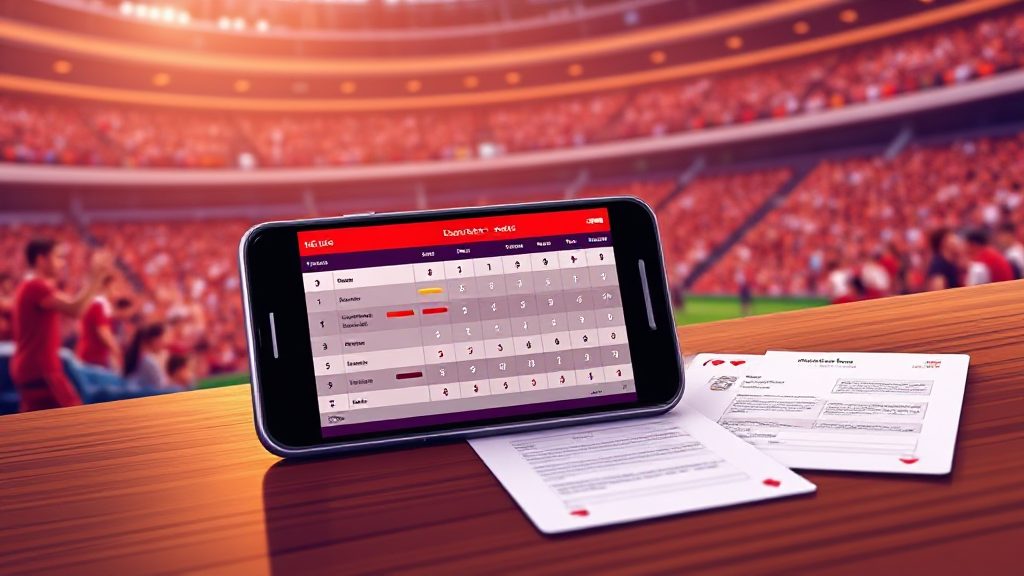
Reading the Score Bar on All Rummy Game Rankings
You are scrolling through a listing page for an All Rummy Game and your eye lands on a horizontal bar with a number beside it. Maybe it reads 8.4, maybe 76 percent, maybe a set of five small dots. Do you actually know what went into that number? Most people do not. They see a bar that is longer or shorter than the one above it and treat that as a verdict. In reality, the score bar is the most information-dense element on the entire page, and it is also the most misunderstood. This piece is about reading it properly, component by component, so that a ranking table becomes a tool rather than a decoration.
Why the Score Bar Deserves More Attention Than the Screenshot
Listing pages are built to be scanned quickly. Screenshots catch the eye, bonus callouts catch the wallet, and the score bar sits quietly in between. That is backwards. A screenshot tells you what a lobby looked like on the day it was captured. A bonus callout tells you what an operator is willing to offer a new user. The score bar, if it is built honestly, tells you how an editor weighed a set of measurable and semi-measurable traits against a rubric. That is the only element on the page that represents judgment rather than marketing.
On a directory like 3 Patti Apps, listings are presented as snapshots and readers are advised to check live operator information before acting. That caveat matters because it reframes what the score is for. The number is not a promise about your future experience. It is a structured opinion, produced at a point in time, about how a product compares to its peers on criteria the editor has chosen to care about. Once you accept that framing, the bar stops being a grade and becomes a map of priorities.
The practical benefit is comparison. If two listings both show a strong overall score but one has a visibly different internal balance, the bars let you see where each product earns its points. That is far more useful than a single star rating, which collapses everything into one opaque figure. A well-designed rubric tells you not just how good something is, but good at what.
What Usually Goes Into a Ranking Score
Exact rubrics differ between directories, but the components tend to cluster around a handful of categories. Understanding these categories is the first step to reading any bar intelligently. When you see a score, you should be able to guess roughly which of these pillars it is leaning on.
Usability and interface clarity. How quickly can a new user find a table, understand the rules, and navigate back to the lobby? This is often weighted heavily because it affects every session. A product that is confusing on the first visit rarely becomes less confusing on the tenth.
Game variety and table structure. A rummy listing may cover multiple variants, different stake levels, and different table sizes. Editors typically reward breadth, but only when the breadth is coherent. Fifty variants that nobody plays is not the same as eight variants with healthy tables.
Bonus and promotion transparency. This is where score bars often diverge most sharply from marketing copy. A large headline bonus can score poorly if the terms are buried, the wagering requirements are steep, or the expiry window is short. A smaller but clearly explained offer can score higher. The rubric is measuring clarity, not generosity alone.
Payout and withdrawal notes. Directories that track payout information usually fold it into the score as a reliability signal. Processing times, stated limits, and the presence of clear documentation all matter. A listing that is vague about withdrawals tends to lose points even if everything else looks polished.
Support and documentation. Responsive help channels, readable FAQs, and accessible terms pages are unglamorous but heavily weighted in good rubrics. They are also the components most likely to be overlooked by readers who only look at the top-line number.
Verification and freshness. Some rubrics include a component for how recently the listing was checked. A score attached to a stale snapshot should be read with more caution than one attached to a recent review. This is the component that quietly anchors everything else.
How to Read a Score Bar Without Being Misled
Reading a bar well is a small skill, but it pays off every time you compare listings. Start with the scale. Is the bar out of five, out of ten, or out of one hundred? A 7.2 out of ten and a 72 out of one hundred are not the same claim, because the underlying rubric may treat the midpoint differently. A ten-point scale often clusters scores between six and nine, which compresses real differences. A hundred-point scale spreads them out and makes small gaps more visible. Neither is inherently better, but you should know which one you are looking at.
Next, look for the sub-bars. Many listings break the overall score into category bars beneath or beside the main figure. This is where the useful detail lives. A product with a strong overall score and a weak payout sub-bar is telling you something specific: it may be pleasant to use but slow to document withdrawals. A product with a modest overall score and strong sub-bars across usability and support may be a better fit for a cautious user than the headline number suggests.
Then check the direction of the weighting. Some rubrics weight usability most heavily, others weight game variety. If you can find the rubric notes, read them. If you cannot, infer the weighting from which sub-bars move together with the overall score. A listing whose overall score tracks its bonus sub-bar almost exactly is probably bonus-weighted. That is not dishonest, but it means the score is answering a narrower question than you might assume.
Finally, compare bars only within the same table. A score of 8.1 in one directory’s rubric is not transferable to another directory’s rubric, and it is certainly not comparable to a user review average. The bar is meaningful relative to its neighbours on the same page. Treat it as a local ranking signal, not a universal grade.
One more habit worth building: look at the bottom of the table as carefully as the top. The lowest-scoring listings often reveal what the rubric penalises most, and that tells you what the editors consider non-negotiable. If every low-scoring entry shares a vague withdrawals section, you have learned something about the rubric’s priorities that the top entries alone would not show you.
Where Score Bars Fall Short, and How to Compensate
No rubric is neutral. Every weighting decision reflects a judgment about what matters, and those judgments may not match yours. A reader who cares mostly about table variety will find a usability-weighted score only partly useful. A reader who cares about withdrawal clarity may find that the component they value most is a minor sub-bar. The score bar is a starting point for your own comparison, not a substitute for it.
There is also a freshness problem. Scores are snapshots, and products change. A listing reviewed months ago may describe a bonus structure or a withdrawal process that has since been revised. This is exactly why directories that present listings as snapshots advise readers to confirm details on the operator’s own pages. The score tells you where to look; the live operator information tells you what is true today.
Beware of scale inflation, too. When most entries in a table sit between eight and nine out of ten, the bar stops discriminating. In that situation, the sub-bars and the rubric notes carry almost all the real information, and the headline number is close to noise. A good directory will occasionally publish a genuinely low score, because a rubric that never says anything negative is not measuring much.
Finally, remember what the bar cannot see. It cannot measure your personal preferences, your device, your connection, or your tolerance for a particular interface style. It cannot tell you whether a game variant you love is well populated at the hours you play. Use the score to narrow the field, then use the listing details and the operator’s own documentation to make the final call.
Building the Habit of Score-Literate Browsing
The difference between a casual browser and a score-literate one is small but consequential. The casual browser sorts by the biggest number and moves on. The score-literate browser opens the rubric, checks the sub-bars, notes the review date, and then compares two or three listings on the specific components that matter to them. That process takes a few extra minutes and produces a much better shortlist.
It also makes you harder to mislead. When you understand that a score is a weighted composite, you stop treating it as an objective verdict and start treating it as an argument. Arguments can be good or bad, and you can evaluate them. A listing that shows its components and dates its review is making a stronger argument than one that presents a bare number with no explanation.
So the next time you land on a ranking page, do not skip the bar. Read the scale, find the sub-bars, infer the weighting, and check the date. Then look at the operator’s own pages for the details that no directory can guarantee. The score bar is the most useful part of the listing precisely because it is the part that shows its work. Use it that way, and the ranking table becomes a genuine research tool rather than a leaderboard to glance at.
Frequently Asked Questions
What does the overall score on a rummy listing actually measure?
It measures a weighted composite of criteria chosen by the directory’s editors, typically covering usability, game variety, bonus transparency, payout documentation, support, and review freshness. It is a structured editorial opinion rather than a guarantee about your experience.
Why do two listings with similar scores feel so different in practice?
Because the overall score hides the internal balance. Two products can reach the same total through different strengths. Checking the sub-bars shows whether a listing earns its points through usability, variety, or bonus clarity, which is usually what determines whether it suits you.
How often should I expect a ranking score to change?
Scores change when a listing is re-reviewed or when an operator revises its terms. Because listings are snapshots, you should check the review date and confirm current details on the operator’s own pages before relying on any figure.
Is a higher score always better for me?
Not necessarily. A high score reflects the editors’ weighting, which may not match your priorities. If withdrawal clarity matters most to you, a slightly lower overall score with a strong payout sub-bar may be the better choice.